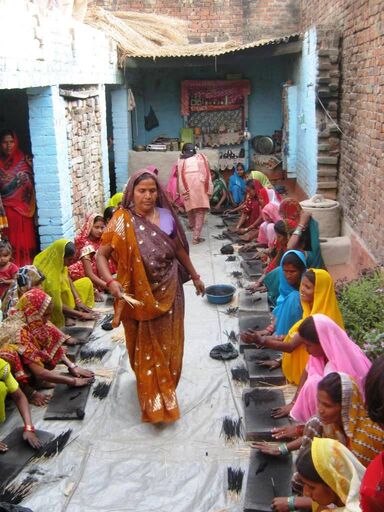
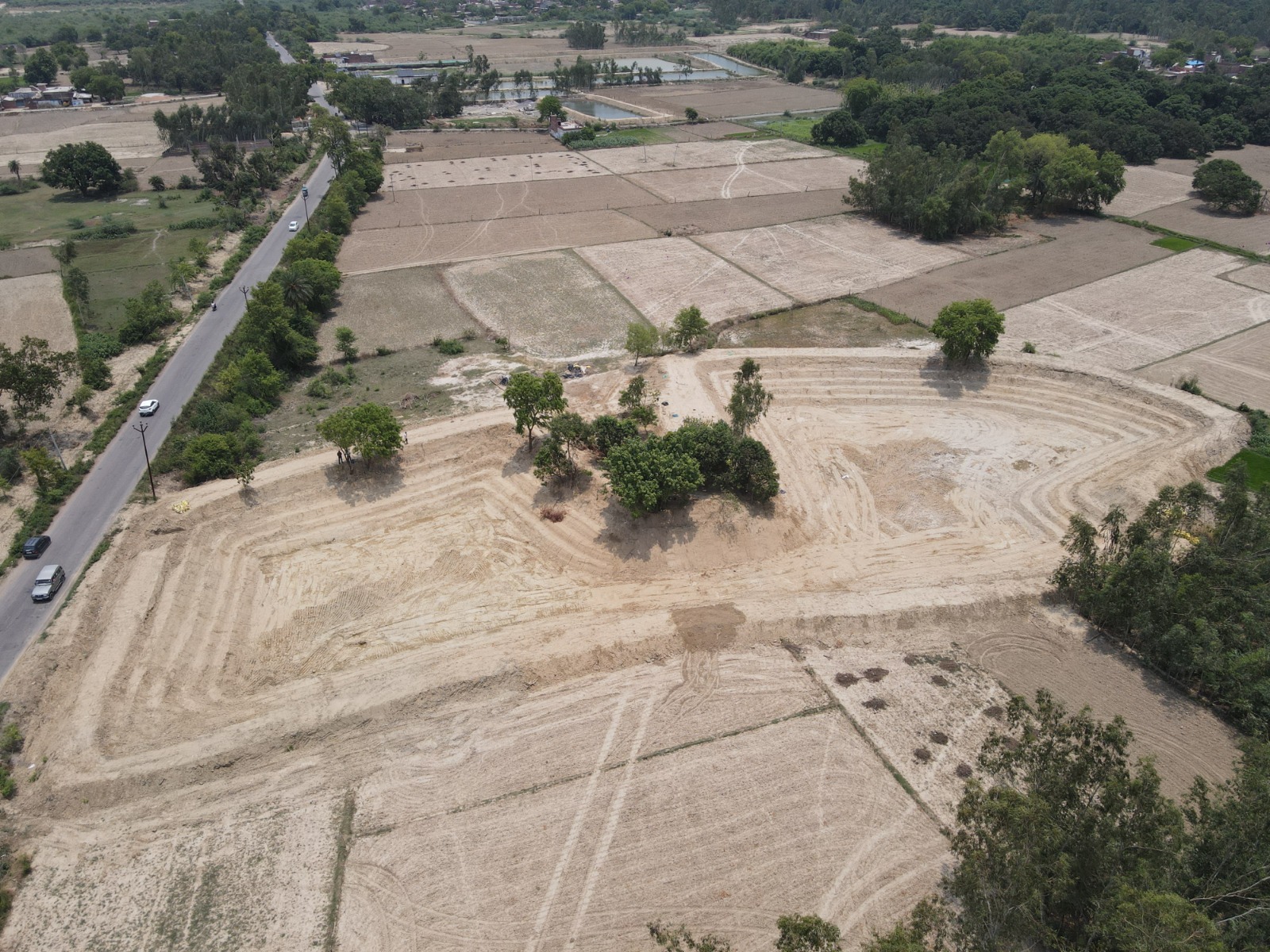
Pond Rejuvenation Project unnao:
Pilot Project on Pond Rejuvenation in Unnao District
NOTS – Organization of Technological Students, with financial support from NABARD, is implementing the Pilot Project on Pond Rejuvenation in Unnao district, Uttar Pradesh, under the Water Development Fund (WDF). The project aims to restore traditional village ponds to enhance rainwater harvesting, groundwater recharge, irrigation potential, and environmental sustainability.
The project includes scientific pond rejuvenation through de-silting, strengthening of pond embankments, plantation, grass seeding, and community participation. Water User Groups are being formed to ensure long-term maintenance and sustainable management of the restored ponds.
Along with physical restoration, the project emphasizes community awareness through sensitization programmes, water conservation campaigns, and capacity-building activities. Advanced technologies such as drone surveys, geo-tagging, geo-fencing, and satellite imagery are being used for effective planning and monitoring.
Through this initiative, NOTS is contributing towards water security, climate resilience, improved agricultural productivity, biodiversity conservation, and sustainable rural development by creating a replicable model of community-led pond rejuvenation.
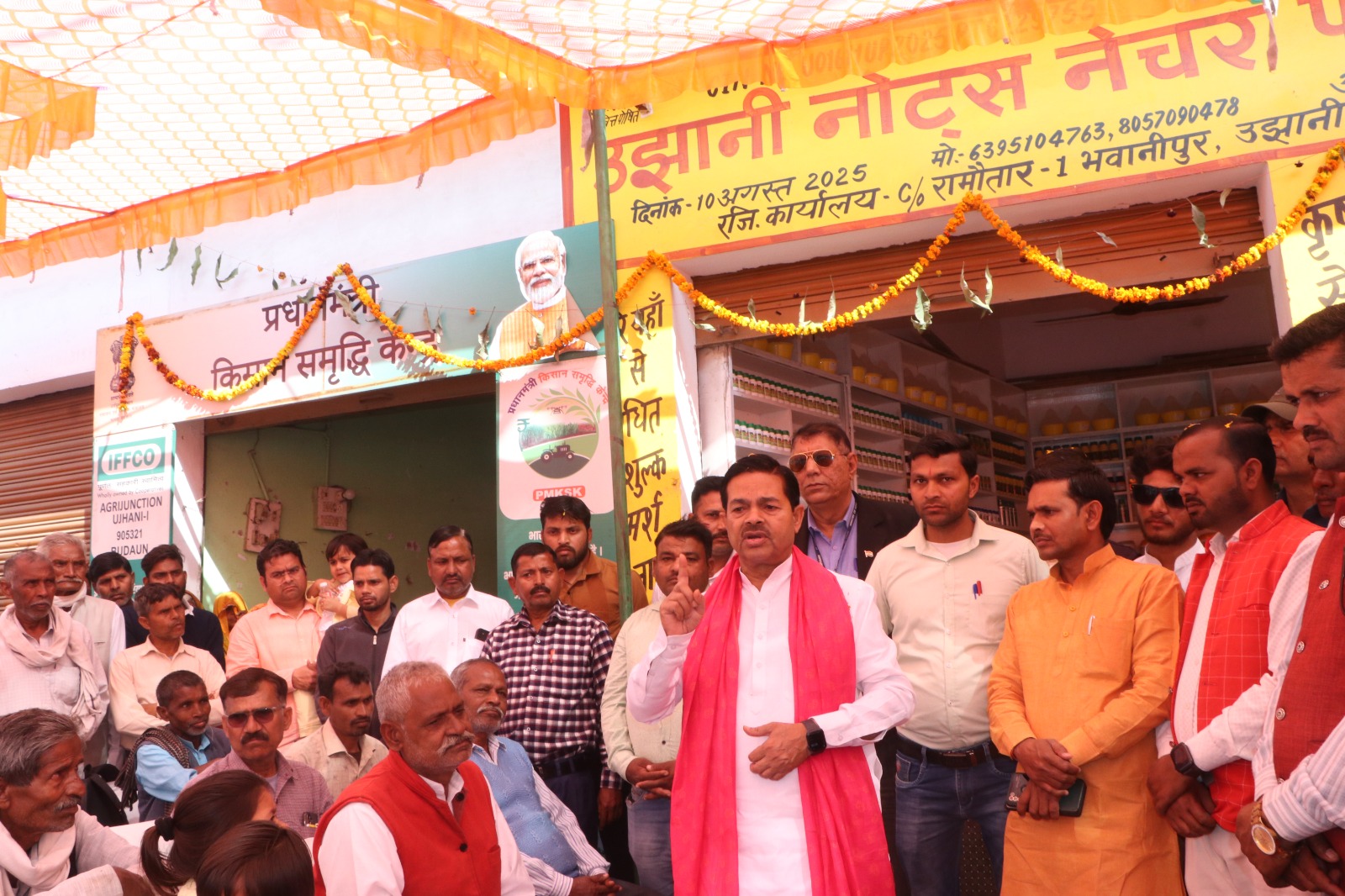
Farmers Producer Organization (FPOs):
Formation & Promotion of Farmer Producer Organizations (FPOs) in Budaun District
NOTS – Organization of Technological Students is implementing the Formation & Promotion of Farmer Producer Organizations (FPOs) project in Budaun district, Uttar Pradesh, under the State Sector Scheme "Aatmnirbhar Krishak Samnvit Vikas Yojna", supported by UPDASP, Lucknow.
The project aims to organize small and marginal farmers into professionally managed Farmer Producer Organizations (FPOs), enabling them to access quality agricultural inputs, institutional credit, modern technologies, value addition, and better market opportunities through collective action.
As part of the project, 07 Farmer Producer Companies have been successfully registered under the Companies Act, 2013. Baseline and diagnostic studies have been completed, village-level farmer mobilization and awareness programmes have been conducted, bank accounts have been opened, FPOs have been registered on the UPFPO Shakti Portal, and key institutional processes, including the appointment of CEOs and Accountants, have been completed.
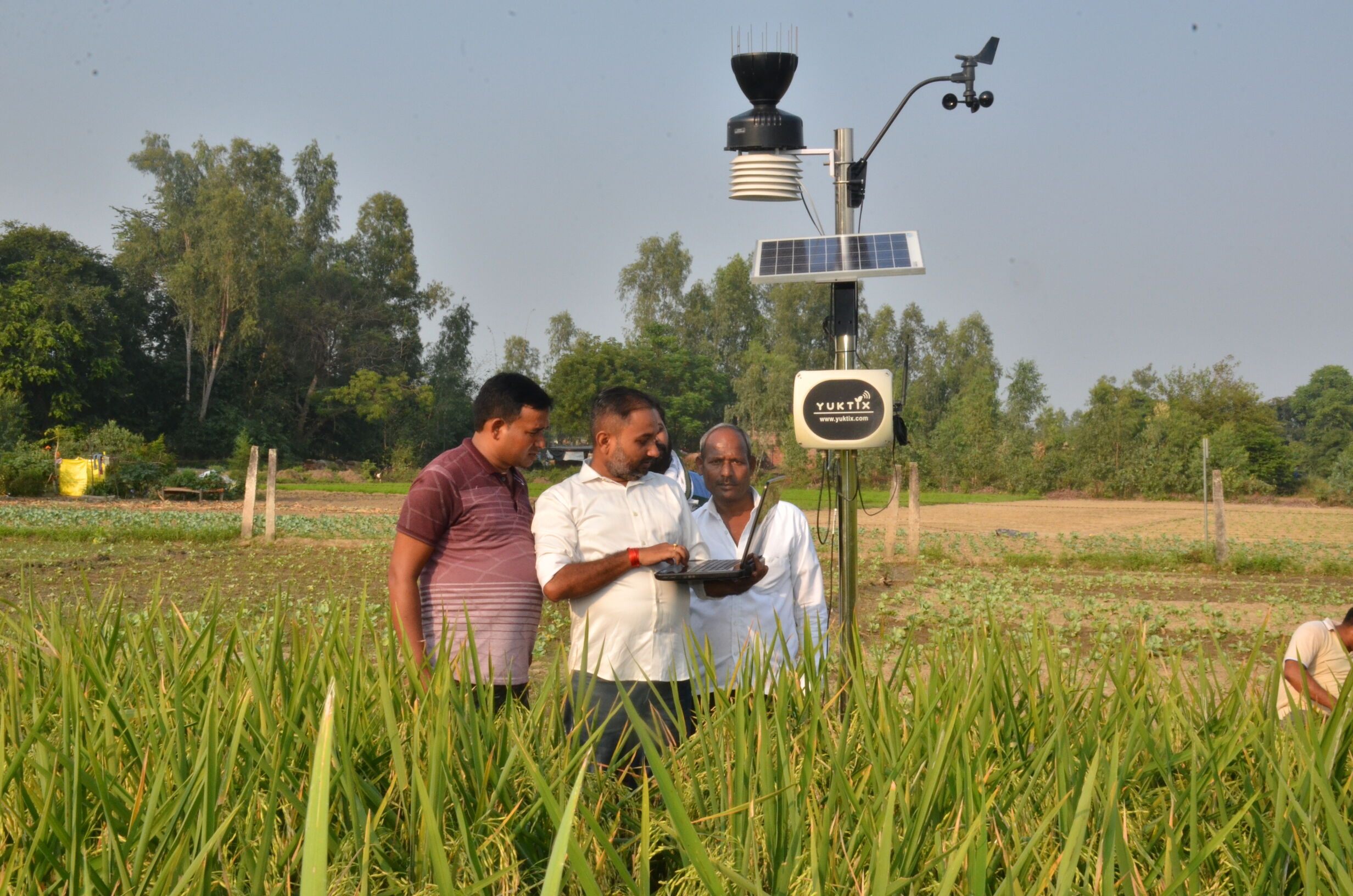
IOT Based Smart Agriculture:
IoT Based Smart Agriculture Major issues in Agriculture Traditional cropping practices Improper use of inputs – enhanced cost Difficulties in adopting precision methods - How much, when, how to.. Risks Migration of rural youth from agriculture The solution.. IoT in agriculture IoT Project in Unnao • Project area : Sikandarpur Sarosi block • Aim : Application of IoT technology for • Scientific & optimum management of resources, • improved production, • reduction in cost • enhanced income of farmers IoT based smart sensors agriculture stick for live temperature and moisture monitoring This aims in giving an efficient monitoring of environment which will help the farmers to do smart farming increasing their overall yield and quality of products. The Agriculture stick being proposed in these project is integrated with Arduino Technology, Breadboard interfaced with various sensors providing live data feed online from Thingsspeak.com.
This project gives 98% of the accurate data using the live agricultural stick tested on Live Agriculture Fields. Management of crop water To perform agriculture activities in an efficient way, adequate water is needed. In this approach the agriculture IoT is interfaced with Web Map Service (WMS) and Sensor Observation Service (SOS) to ensure water is properly managed for irrigation which in turn reduces water wastage. Precision Agriculture The weather information provided by this method should be high so that it reduces the chances of crop damage. Here agriculture IoT ensures in time delivery of real time data in terms of weather forecasting, soil quality, labor cost and much more to the farmers. IPM/C -Integrated Pest Management/Control In this, agriculture IoT systems assures that farmers with accurate environmental data via proper live data monitoring of temperature, moisture, growth of the plants and level of pests so that proper care can be given during production. Food production & Safety agriculture It accurately monitors various factors like temperature of warehouse, shipping transportation management system and integrates cloud based recording systems.
PROJECT SRAJAN:
SRAJAN - Project Supported by NABARD under RIF Rural migrants are afflicted with lack of information, poor training and virtually no support when they enter the labour markets in cities, towns or industries. They enter the lowest end of the economy and are unable to advance on their own. Lack of bargaining power ensures these conditions remain static there are very few avenues for upgrading skills to become more successful. Thus they remain highly exploited, retire early or are eased out of the labour market. The agency proposes to address these problems through the creation of Skill Training and Placement Cell (STEP CELL) for Rural Migrants Labor in Kanpur & Kanpur dehat Districts. It is an attempt to address the cause of rural migrant labors by providing them meaningful and gainful employment. The idea is to provide end to end solution, right from creating awareness to providing skill training and finally placement. OBJECTIVES @ Improve the opportunities available to unemployed rural migrants in terms of employment and returns. @ Help them to attain more secure and dignified work conditions. @ Improve policies and public response to the problems of migrant workers. @ Apart from imparting skills/trainings, teaching them life skills, confidence and employability. @ To provide not only the skill training but also the proper placement for livelihood. ACTIVITIES: @ Training & Placement to 300 Labours in various activities. @ www.labourexchange.in has been launched. @ Self Employment and Livelihood Support Centre has been established. IMPACT: # a pool of 300 rural people have been provided STEP opportunities in various training and placement activities through the Bureau services. # a regional and inter-state network of employment providers, private business and industry members is to be functioning and the cell would be functioning as regional labor exchange.
SKILL DEVELOPMENT INITIATIVES:
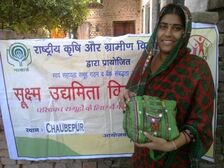
NABARD SPONSORED SDI PROGRAMME : With the objective of providing technical skills to rural youths to enable them to take up self employment and employment in the broad fields of industries, services, and business activities, the scheme of Training of Rural Youth for Self-Employment or employment was started. NOTS has completed two Skill Development Initiative program in for skilling youth and employment of rural youth. 1. Bag Making Training: - This programme is for 30 women participants of maitha block of kanpur dehat district. 2. Inverter Repairing Training: - this training programme is for 30 rural youths of kalyanpur block of kanpur nagar district. @ To aware & educate the community about objective & activities of proposed Skill Development Initiative (SDI) @ To provide opportunity to rural youth for knowledge up gradation and skill up gradation for their income generation. @ Providing vocational training to the rural youth who are interested to adopt self employment after completion of training program @ To control social evils due to the lack of income generation activities in target area @ To control over the bad migration of rural youth and exploitation of all opportunities at local level. Impact of Program: All participants have got employment in service sector as well as running a self business after completion of training.
MICRO ENTERPRISE DEVELOPMENT PROGRAMME:
MICRO ENTERPRISE DEVELOPMENT PROGRAMME (MEDP) :
NOTS has the belief that employment and income generation is surest way to enable the rural women to cross the poverty line and ensure women empowerment in rural areas. NOTS conducted various training programme under MEDP sponsored by NABARD :
# Agarbatti & Dhoopbatti Making Training # Readymade Garments Making Training
# Detergent Making Training
# Candle Making Training
# Artificial Jewelry Making Training
# Low cost Bag Making Training
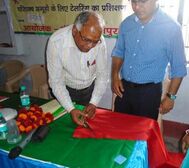
around 8-10 SHG women has been engaged and more that 200 women have been trained under MEDP programme in kanpur district. Now, these women engaged in various kind of income generating activities.
FARMERS CLUB PROGRAMME:
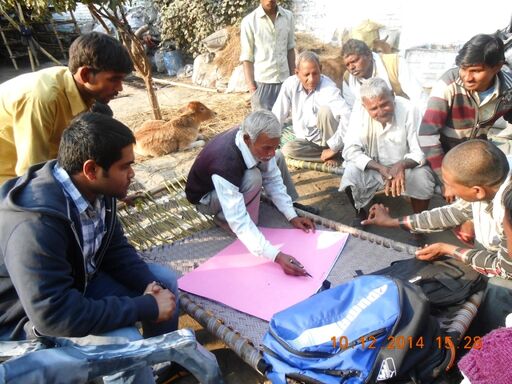
Farmers’ Clubs are grassroot level informal forums. The broad functions of the Farmers’ Clubs would be to: @ Coordinate with banks to ensure credit flow among its members and forge Better bank borrower relationship,
@ Organise minimum one meeting per month and depending upon the need, there would be 2-3 meetings per month. Non-members can also be invited to attend the meetings,
@ Interface with subject matter specialists in the various fields of agriculture and allied activities etc.,
@ extension personnel of Agriculture Universities, Development Departments and other related agencies for technical know how upgradation. For guest lectures, even experienced farmers who are non members from the village/ neighbouring villages could be invited,
@ Liaison with Corporate input suppliers to purchase bulk inputs on behalf of members,
@ Organize/facilitate joint activities like value addition, processing, collective farm produce marketing, etc.; for the benefit of members.
@ They can also sponsor / organise SHGs, Undertake socio-economic developmental activities like community works, education, health, environment and natural resource management etc.
@ Market rural produce and products NOTS has formed more than 150 farmers clubs in Kanpur Dehat, Kanpur Nagar and unnao districts of Uttar Pradesh Activities of Farmers Club organized by NOTS -
1. Basic Level Awareness & Orientation Meet
2. Meet with Expert Programme (Twice in a Year)
3. Exposure Visit of Farmers Club Members.
.jpg)
VILLAGE DEVELOPMENT PROGRAM:
The main objective of the program was to provide quality of life in the villages and suggest ways the means to improve the same. The program related to village development such as education, drinking water, health, sanitation and greening of the villages. For implementation of program we had selected two villages of development block Kalyanpur (Kanpur Nagar) & Maitha (Kanpur Dehat), Hindupur and Manda. The objective of the program was to develop two villages as a model villages where ensure convergence which will be an illustration for all the villages of block. The integrated model for village development program includes provision of basic infrastructure, health-care and education facilities, along with opportunities for employment and measures to reduce environmental degradation. The activities are organized under five main areas Economic Development, Health, Education, Infrastructure and Environment improvement. We work with a range of partners to achieve this goal including nonprofits, businesses, and governments. Self Help Groups and Krishak Club are also an important component of our strategy and provide the rural households, especially women, the confidence to participate in economic activities ranging from livestock management, dairy and poultry farming to cottage industries. Through successful partnership between the government and social mobilization of communities, better employment opportunities are provided leading to increased household incomes and quality of life.
Impact of Program:
@ Sustainable agriculture initiative by promoting Farmers Club in village agriculture and allied activities,
@ Enhancing employability initiative in youth by providing skill development @ Convergence of development plan in village by linkages with line department
@ Entrepreneurship development initiatives among women by promotion of Self-help-group and Self-activity-group
@ Financial literacy among village community and implementation of bank scheme by awareness creation
WOMEN EMPOWERMENT THROUGH SHG:
NABARD sponsored SHG-Bank Linkage Programme :
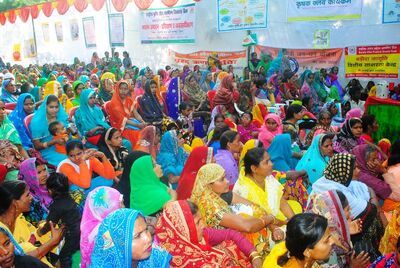
SHG are the best facilitators of rural employment and income generation, income distribution and empowerment of rural women. NOTS follows the strategy of SHG formation for many of its livelihood and other income generation programs sponsored by NABARD. It has promoted more than 250 SHGs in four development blocks of its operations and total of the SHGs are linked to banks too. It has since been promoting savings and internal circulation of funds in these groups. Most of these groups have been linked to the banks for savings purposes.
The SHG program of NOTS is closely intertwined with its other developmental interventions. Each SHG has 10-20 members. These are required to meet and deposit savings every month. This process is monitored by the Grass root leader and Micro finance Organizer. After formation of Group, SHGs are linked to the banks as per the bank regulations.
Loan disbursal decision rests with the group members jointly. Repayment schedule is flexible and decided by the group at the time of disbursement. Interest is charged at a rate of 2% per month on reducing balance. The loan amount ranges from Rs 1,000 to Rs 4,000 and in some exceptional cases it is up to Rs 10,000. Total number of women who took membership is more than 2500
SOCIAL DEVELOPMENT:
We define social development in its broadest social terms as an upward directional movement of society from lesser to greater levels of energy, efficiency, quality, productivity, complexity, comprehension, creativity, choice, mastery, enjoyment and accomplishment. Development of individuals and societies results in increasing freedom of choice and increasing capacity to fulfill its choices by its own capacity and initiative. The essential nature of the development process is the progressive development of social organizations and institutions that harness and direct the society’s energies for higher levels of accomplishment. Society develops by organizing all the knowledge, human energies and material resources at its disposal to fulfill its aspirations.
Various studies on poverty, social status and migration in rural area, and the Umang's own learning from the operation of the project and other field observation, all point out that the poor suffer from an acute shortage of access to basic public health, education services and other public schemes, As a result, they incur high cost debt to smoothen consumption needs, especially with regard to health.
LIVELIHOOD:
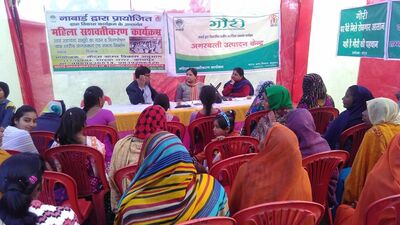
Employment generation and consequently poverty elimination are the prime objectives of the NOTS. The entire programs were designed and implemented in such a way to keep the women out of the vicious cycle of poverty and dept trap and sustain their livelihood without any hassles. Women were therefore engaged in Chikankari Enterprise, Incense rolling and these have proved advantaged for them. The objective of the livelihood initiative is to enhance sectoral size and productivity growth in key livelihood sectors for employment generation of the poor.
This will be achieved by making investments in technical assistance, service provision and setting up of market support mechanisms. At present NOTS is organizing two major livelihood support program where total risk of business is beard by organization
.jpg)
KNOWLEDGE BUILDING:
NOTS undertakes quality research studies and proactively identifies new relevant areas that require research for policy and practice interventions. Efforts are also taken to forward the outputs and make them available and actionable by different stakeholders. These research studies enable NOTS to provide services like providing information and knowledge base on key priority sectors, emerging development issues, inputs to policy dialogues and practices.
CAPACITY BUILDING AND INSTITUTION BUILDING::
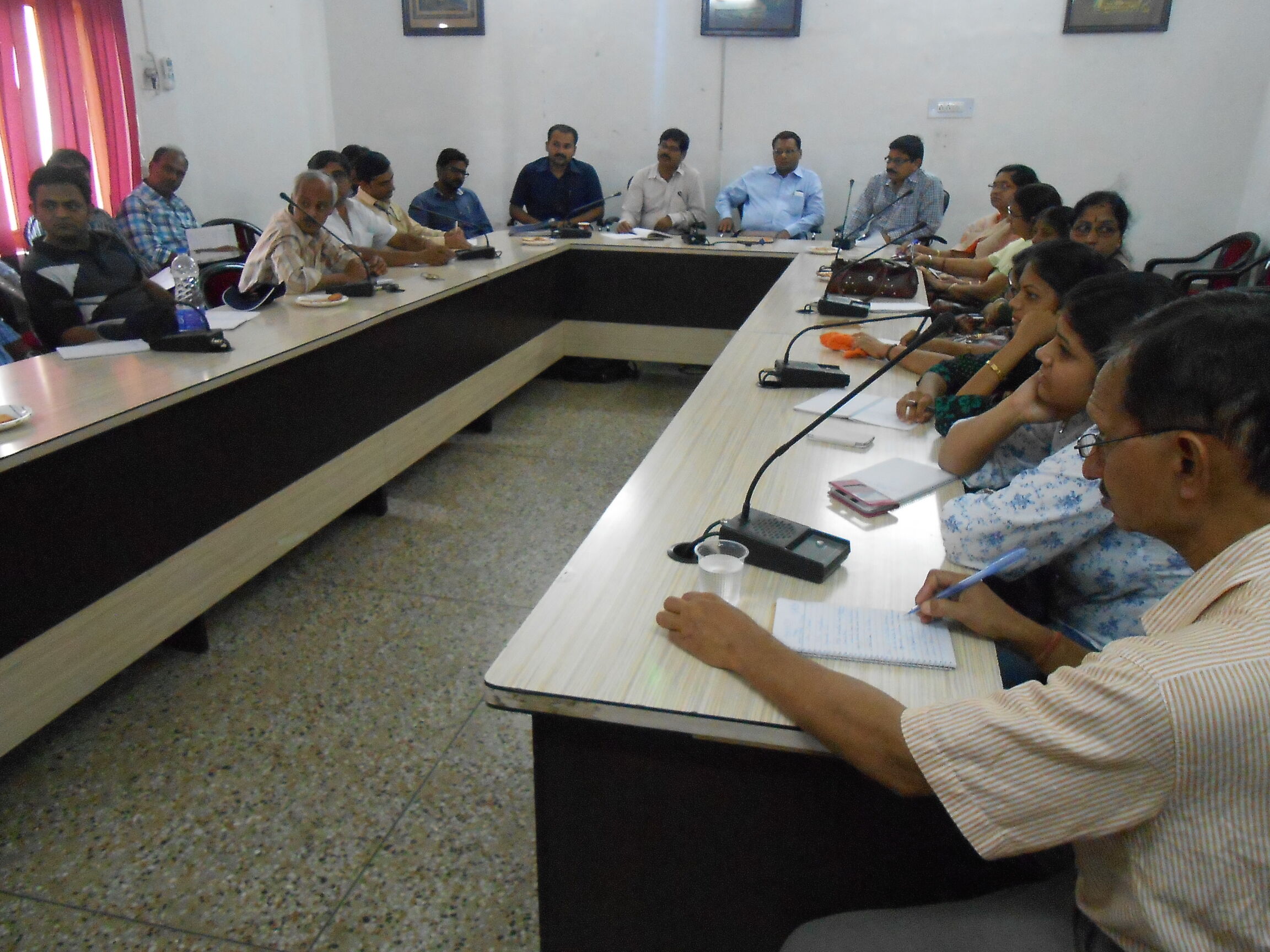
Capacity building and empowerment are important for which there should be decentralized capacity building among the rural women particularly women. Under the capacity building program NOTS organized several training program for its project beneficiaries during the year. These programs included Group management, savings, micro credit, forward and backward linkages, marketing techniques etc. Exposure visits to other organizations engaged in such programs.
Training is an important component of HRD which enhances knowledge, skill and attitude. For building technical competency among people, need base skill orient training programs to reinforce their role in Micro-finance and micro-enterprise activities need special attention. An unskilled man needs to be given training to building his capacity to achieve any objective. NOTS recognized this aspect and has imparted training of Capacity building to the members of SHGs to achieve the objectives of the project. In this process NOTS has been able to build up self confidence of the members and equipped them for achieving the objectives.
This programs help farmers to understand technologies, upgraded methods, and exposure of quality product of seeds and technology application
AGARBATTI:
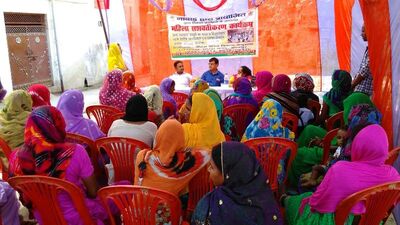
Agarbatti is a micro-enterprise group for Production of raw Agarbatti was identified as an easy item for the women members as did not involved any difficult technology. This consist 675 women who regular involve in Agarbatti production and easily role one Kg of Agarbatti per day through hand roll and 365 are earning Rs. 3000-4500 per month with micro enterprise Agarbatti through peddle roll Agarbatti.
To ensure that Micro-enterprise Agarbatti becomes a major source of income generation for the poor, women’s Livelihood Enhancement Program is focusing on several measures in the target area. The poor are being trained and motivated to use sustainable skill up gradation and capacity building practices so that the women income generation capacity are enhanced, 750 hundred of women across the program area have been trained in making incense making.